AP SHOULDER WITH EXTERNAL ROTATION
Anteroposterior projection with external rotation for specific shoulder evaluation
Exposure Factors
Low exposure: Optimized parameters for visualization with external rotation
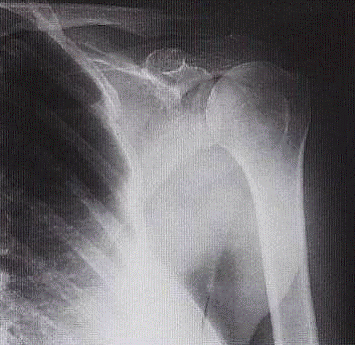
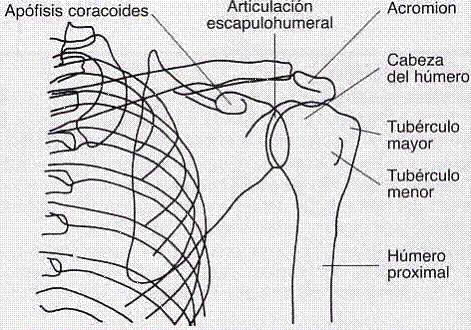
Anatomical Structures Visible
Should be clearly observed:
- Proximal humerus with external rotation
- Two-thirds of clavicle
- Superior scapula
- Relationship of humeral head with glenoid cavity
- Greater tuberosity in lateral profile
Pathology demonstrated:
Specific evaluation: Greater tuberosity fractures and calcific tendonitis
Cassette Size and Orientation
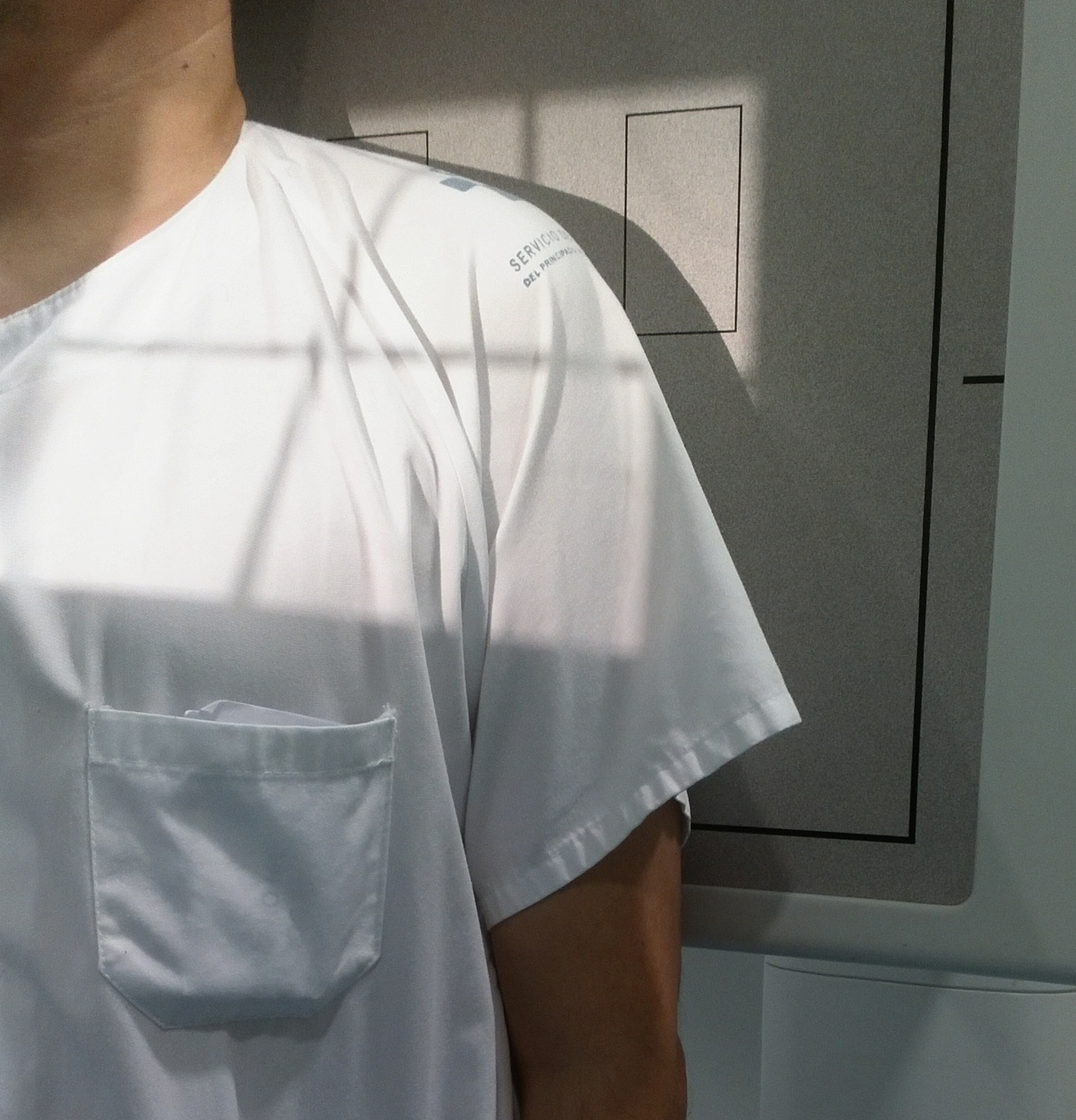
Patient Positioning
Hand Position
Specific positioning for external rotation:
- Palm facing forward or upward
- Arm in full external rotation
- Elbow extended or 90° flexed
Central Ray Point
Direction: Perpendicular to entry point
Location: Centered on glenohumeral joint
Purpose: Optimal visualization of greater tuberosity
Optimal Image Characteristics
Greater Tuberosity
In lateral profile
Articular Relationship
Humeral head - glenoid
No Superposition
Differentiated structures
Full Field
Proximal humerus to clavicle
Common Technical Challenges
Frequent problems in AP with external rotation:
- Insufficient external rotation due to pain or joint limitation
- Poor shoulder placement relative to bucky
- Movement during exposure due to muscle fatigue
- Structure superposition from incomplete rotation
- Incorrect hand position affecting humeral rotation
Solution: Ensure maximum tolerable external rotation and support extremity to avoid fatigue
Special Considerations
Limited Rotation
Rotate to maximum tolerable without forcing
Document achieved rotation degree
Painful Patient
Position with maximum comfort
Consider pre-exposure analgesia if needed
Geriatric Patient
Consider mobility limitations, possible need for additional support.
Patient Instructions
"Hold your breath during the exposure"
Maintain external rotation position without movement during radiographic exposure
1. "Turn your arm outward as much as possible"
2. "Keep your palm facing upward"
3. "Hold your position without moving"
4. "Take a deep breath and hold it"
5. "Stay still during the exposure"